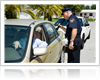
If you get pulled over by an officer, and you are handed a speeding ticket, the officer cannot go ahead and search the car—not without a valid reason anyway. What constitutes a valid reason? When can an officer arrest you, even for a traffic ticket? The answers will vary a great deal according to your state's laws, so be sure to call a criminal defense attorney as soon as possible if this is a pressing issue for you.
Of course, a search is clearly valid if the driver gives the officer his or her consent to conduct the search. Generally speaking, however, an officer cannot search your car without probable cause or if you are under arrest. In some states, however, an officer can make an arrest for something as little as not wearing a seatbelt or for speeding. If a driver is arrested, the police could search a car if and only if they have reason to think there could be evidence related to the traffic violation inside, or if there seems to be weapons, a way to escape custody, or illicit items such as drugs. But even in such searches, an officer has very specific rules to follow, including that the officer can search the spots where it appears the item could be.
What this means though is that even an arrest does not necessarily justify a car search. For instance, an officer couldn't necessarily search your car because you drove with a revoked license, but they could look through your car if they reasonably suspected that you were running away from a burglary or that you are armed, for instance. After all, there is no valid reason to think there is evidence of a revoked license in the car, but if an officer arrests someone, frisks them, and finds burglary tools, they might have reason to search the car further.
Can an officer search your car outside of an arrest? It depends on the circumstances, but yes, if he or she detects something that triggers their suspicion, they might have probable cause to go through with the search.
In summary, an officer's search is likely valid:
- When a driver gives permission
- There was probable cause
- After an arrest
- When a car is impounded
If it turns out that a police search was unreasonable, then any evidence that was turned up might get thrown out of the case. But even if a search was valid, perhaps the officer did not have probable cause to stop you in the first place, or maybe an arrest was unlawful. There are potentially many other ways to counter a mistaken charge that has been filed against you. Find out how you may be able to mount a defense and preserve your reputation and freedom when you talk with a criminal attorney today!
